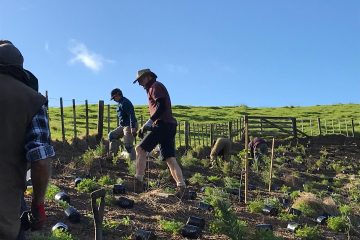
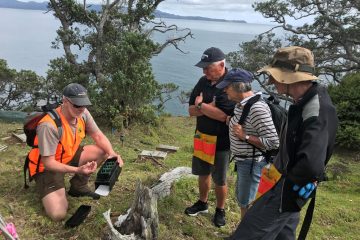
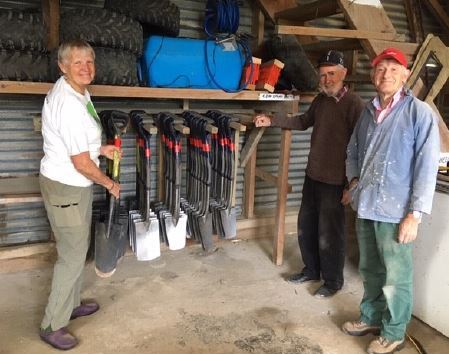
The Thursday work group was very happy to catch up on various tasks in the Park, which had been delayed by lockdowns: rabbit holes along the fence of the takahē enclosure were filled in; rusted netting was replaced by two panels of stainless steel netting at the Jones Bay end of the pest-proof fence; a cattle-stop at the tank race was fixed; a stile was put in at M16; and Alison, Roger and Ron (below) built a new rack for the many spades used by volunteers on public planting days. This back area of the workshop also received a spring clean.
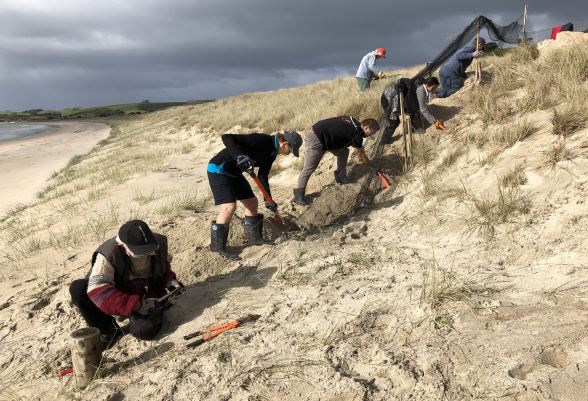
In an attempt to increase the effectiveness of the pest-proof fence, extensions were built from the end of the permanent fence down to the high tide line on the beach. However, these extensions are made from materials that do require repair and replacement occasionally.
The imported East African highland grass kikuyu, is widely regarded as both a blessing and a curse, depending on your perspective. Being drought-resistant, it provides valuable although not very nutritious feed for stock. But in non-drought conditions, its vigorous growth quickly chokes any other plant.
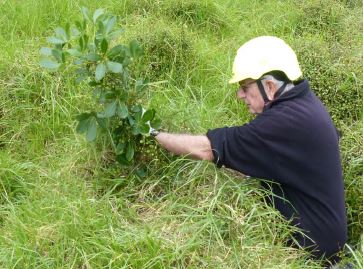
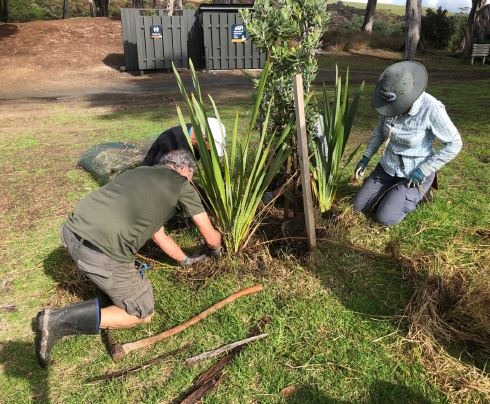
Therefore, in preference to constantly spraying it, young trees and shrubs need to be regularly freed from the kikuyu’s grip.